Thursday, August 27, 2015

The Effect of Neighborhood Residence on Health Outcomes

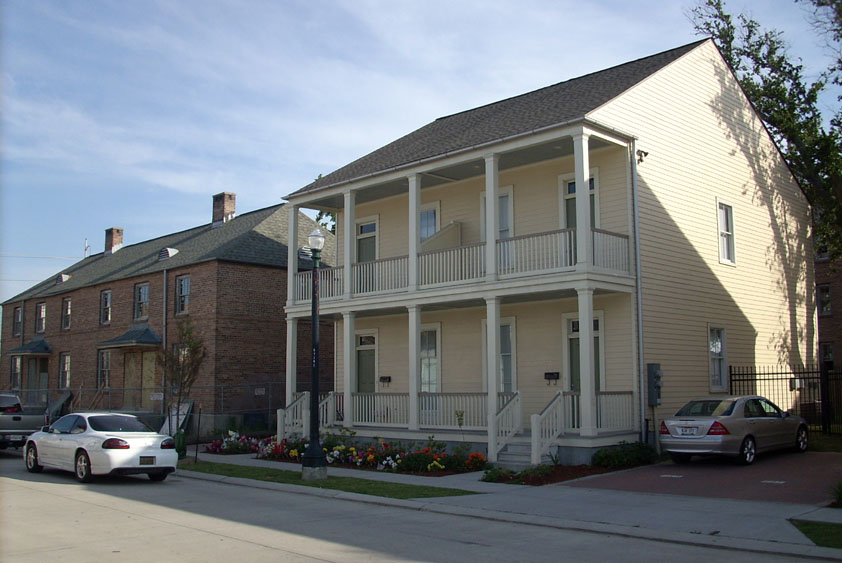
St. Thomas Housing Projects - New Orleans, LA circa 2004
Source: Reuters.com
St. Thomas Housing Projects - New Orleans, LA circa 2009
Source: Jeffrey Murrell, seabrite.com

"The health consequences of neighborhood poverty are a public health problem." -- Dr. Tama Levanthal

Data shows that neighborhood residence affects physical and mental health outcomes. Individuals who grow up in or move to to high-opportunity, low-poverty neighborhoods are less likely to face physical and mental health issues whereas those living in low-opportunity, high-poverty neighborhoods have higher incidences of poor physical and mental health outcomes (Levanthal,1). This theory was tested in Moving to Opportunity (MTO), an experiment designed and implemented by the U.S. Department of Housing and Urban Development. In the experiment, volunteer families living in public and assisted housing projects n Baltimore, Boston, Chicago, Los Angeles, and New York were randomly assigned to one of three one of three treatment groups: the experimental group, the comparison group, and the control group. The experimental group received housing vouchers for one year that could only be used in low-poverty neighborhoods; the comparison group received regular housing vouchers that could be used in any neighborhood; and the control group remained in the housing projects. Results from the study showed that MTO experimental families enjoyed significantly better health outcomes than the control group.

The results from this study are consistent with previous research that indicates that neighborhood environment matters for low-income youth and adults. The MTO study found significant relationships between neighborhood opportunity and individual health outcomes. In general, those living in high-opportunity neighborhoods experienced less obesity, asthma, and fewer physical health problems than those living in low-opportunity neighborhoods.

This clear and convincing evidence that neighborhood affects long-term health outcomes indicates the need for viable strategies to provide low-income youth with access to the resources afforded to youth in high-opportunity neighborhoods. Cities such as Chicago, Baltimore, and Dallas have already begun to work toward this goal through regional mobility programs such as the Housing Choice Voucher program which provides counseling and related support and assistance to help low income families navigate the housing market and find the best home for them. These programs' successes exemplify the potential progress that can be made when law and policy makers, experts, and advocates collaborate to do meaningful work aimed at eradicating the social determinants of health that plague underserved communities.

Sources
Julian, Elizabeth (2015). Mobility Works America. Poverty and Race, 24(04), 1 - 2.
Leventhal, T., & Brooks-Gunn, J. (2003). Moving to Opportunity: an Experimental Study of 
        Neighborhood Effects on Mental Health. American Journal of Public Health93(9), 1576–1582.

Monday, July 13, 2015

Flip This Clinic: An Open Experiment for Patient Centered Care

Flip This Clinic: An Open Experiment for Patient Centered Care


Recently, I read a book called Doctor, the Patient will See you Now. It's a fascinating read by Steven Kussin that provides readers with valuable tools to protect their health as they navigate the health care system. As the author transforms from doctor to patient, the readers are given a behind-the-scenes look into the realities of the health care system, and the ways that patients must advocate for themselves in the health care arena. 

New technologies, tools, and social media platforms give patients the power to be more informed and more engaged in their health care. The idea of patient-centered care is emulated in Flip the Clinic a new, open experiment sponsored by the Robert Wood Johnson Foundation that aims to explore new approaches to patient-provider encounters by re-imagining the ways that health care is delivered. Each flip presents a bold new way of looking at the health care encounter. My three favorite flips are discussed below.
  • Flip #35: Model the clinic like the Apple Store. The Apple Store is well known for its customer-centered design. Within seconds of walking into the store, customers are warmly greeted and assisted. There is little upselling, few transactions that require customers to stand in line, and the employees are reliably friendly and knowledgeable. Essentially, all the customer has to do is show up. Dr. Keith Seidel, medical director at Southeast Health Center in San Francisco, California decided to model his clinic after the Apple Store to create a patient-friendly atmosphere from the moment the door is opened. The ultimate goal is to triage patients more efficiently and get to a point of care much quicker. 
  • Flip #55: Increase Digital Health Record Engagement. Though 92 percent of hospitals have a system in place to provide patients with a way to obtain an electronic copy of their health record, very few patients actually use the service. The hassle of getting health records is a major complaint of many patients. So, to move toward a more patient-centered experience, clinicians, medical offices, and health systems are striving to spread the word about electronic health record access by being open data advocates.
  •  Flip #33. Provide context, improve understanding, and generate empathy between physician and patient. Although whole health and wellness is the goal for physicians and patients, often there is a disconnect between physician and patient perspectives on what that means. This pilot aims to help provide context, improve understanding, generate empathy, and drive change in behaviors between physician and patient to bridge the disconnect. Starting in February 2015, several participants from the San Francisco Flip the Clinic Lab tweeted suggestions on how to improve health care delivery and experience using hashtags #Iwishmydoc and #Iwishmypatient. The exchange provided patients and physicians with an open forum to express ideas and give suggestions. In this way, physicians were able to plug in and see what really mattered to patients most and respond to those inquiries if they had additional questions. 
Sources: 
  1. http://fliptheclinic.org/flips/how-can-we-provide-context-improve-understanding-and-generate-empathy-between-physician-and-patient/
  2. http://fliptheclinic.org/flips/run-a-clinic-like-its-the-apple-store/
  3. http://fliptheclinic.org/flips/accessourdata/
  4. http://fliptheclinic.org/